
As UK, France and Germany seek a deal, domestic resistance—not bunker-busters—now shapes Iran’s future.
Negotiations on Borrowed Time
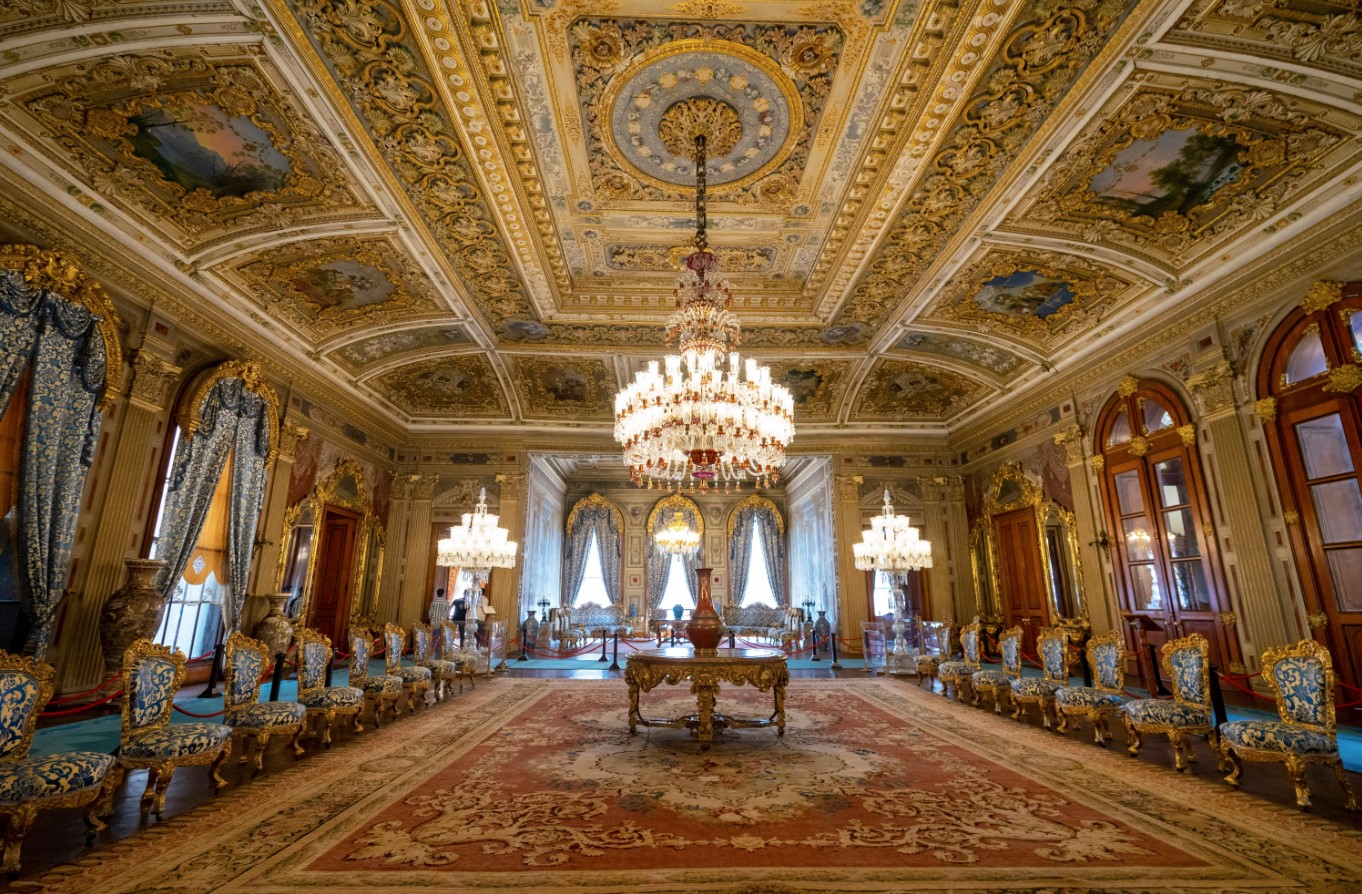
Diplomats filing into Dolmabahçe Palace will praise today’s “constructive dialogue,” but everyone present knows Tehran comes to buy time, not make peace. In eleven weeks the strictest limits of the 2015 nuclear deal expire; if Iranian envoys can keep the conversation alive until October, those curbs will vanish like ink in the sun. Smiles and photo-ops merely camouflage a four-decade survival play: kick the can, stall decisive pressure, hope the world blinks first.
The War That Shook the Façade
Before dawn on 13 June Israeli jets slipped into Iranian airspace, eliminating senior Guards commanders and pounding the buried halls of Fordow, Natanz and Isfahan. Nine days later, with Iran’s air defenses in ruins, two American B-2s dropped thirty-thousand-pound bunker-busters—the heaviest strike the aircraft has flown. Tehran’s reply was furious but largely futile: of more than five hundred ballistic missiles and a thousand explosive drones launched, almost ninety percent were intercepted. Hezbollah and Hamas, pillars of Iran’s “axis of resistance,” kept silent; their arsenals were already mauled. Millions fled Tehran; hospitals overflowed. On 24 June the regime accepted a Qatari-brokered cease-fire whose leaked text read less like diplomacy than capitulation.
Yet on 16 July Ayatollah Ali Khamenei appeared on state television, dripping bravado. He boasted of a “decisive entry” into war, warned of “hypocrite sleeper cells,” and claimed Iran “did not welcome” the conflict it has long prayed for. Every sentence betrayed alarm: decisive entry had lasted hours; the sleeper-cell paranoia revealed fear of MEK resistance units; the sudden aversion to war exposed a slogan gone hollow. It was not a victory lap but a plea to the Revolutionary Guard: stay loyal, do not defect.
Khamenei’s spectacle was not a victory lap; it was a plea to the IRGC: stay loyal, do not defect.
Bombs Cannot Fell an Ideology
Nine months of relentless bombing have not dislodged Hamas from Gaza’s tunnels. Years of Saudi and American air-strikes have failed to silence Yemen’s Houthi launchers. If smaller forces endure such punishment, the Islamic Republic—flush with oil revenue, a domestic drone industry and ninety million citizens—will not collapse because a mountain cracked. Air power can wreck concrete; it rarely pierces the granite of an entrenched ideology.
Still, the Twelve-Day War scarred Tehran’s myth of providence. Inflation exceeds forty-five percent; youth unemployment nears thirty. Bread doubles in price, electricity flickers, shops shutter while Guard businesses gorge on hard currency. Inside this economic freefall, another force gathers strength.
The Street Awakes
For years disciplined cells linked to the People’s Mojahedin Organization of Iran (PMOI/MEK) have defaced billboards, torched Basij bases and hacked state television—three thousand actions in the past Persian year alone. After the air-strikes their banner—“No to appeasement, no to war, yes to regime change”—sounds less like exile rhetoric than common sense. “Khamenei must go, and the Iranian people must decide their own fate,” declares Maryam Rajavi, leader of the National Council of Resistance of Iran (NCRI).
No uprising succeeds on slogans alone. It requires bandwidth, resources, recognition. Solidarity’s victory in Poland accelerated only when Western parliaments named it a legitimate interlocutor. The African National Congress gained momentum once foreign capitals invited its leaders to their podiums. Recognising similar legitimacy to the NCRI would not topple the regime overnight, but it would puncture Tehran’s favorite narrative — that every act of dissent is a Western plot — and signal to wavering Revolutionary Guard officers that the world is hedging its bets.
Maryam Rajavi: “Now Khamenei must go… No to appeasement, no to war—yes to regime change by the Iranian people and the Iranian Resistance.”
Istanbul’s Real Agenda
European diplomats hope Iran will freeze enrichment, reinstall monitoring cameras and avert a U.N. snap-back. Privately they expect only a promise to meet again in September. Tehran welcomes that timetable. Each day of procedural wrangling edges negotiations toward October, when the deal’s spine snaps of its own accord. Iranian negotiators hint that, if pressed, they might resume ninety-percent enrichment or unleash proxies in the Red Sea. Russia and China stand ready to shield them from new sanctions. The strategy is simple: stall, divide adversaries, let the calendar do the heavy lifting.
A Question of Time
Time is the regime’s chosen weapon, yet it also fertilises revolt. Every rial lost, every blackout, every unmarked grave erodes the myth that theocracy equals security. Leaders in London, Paris, Berlin and Washington must decide whether to keep the clock in Khamenei’s hands—extending deadlines, haggling over centrifuges—or place it in the streets of Tehran, Isfahan and Shiraz, where the hourglass is already draining.
Bombs exposed the Supreme Leader’s weakness but cannot dethrone him. Diplomatic small talk buys him breathing room but offers no future to his people. Only Iranians, armed with courage and an organised resistance, can finish what bunker-busters began. The choice for the outside world is stark: keep kicking the can, or stand with those who have everything to gain and nothing left to lose.
Khamenei is a powerless caliph, trapped in failure and deadlock; bombs will not topple him, and chatter on the Bosporus will not bind him. The regime’s clock is ticking. The question is who will own the final seconds.
Sources: IAEA sensor logs; U.S. DoD briefings; Istanbul communiqué, 25 July 2025; War on the Rocks analysis; Mojahedin.org field reports; Al Jazeera casualty tallies; World Bank inflation tracker; IISS 2025 Missile Defence Review.