
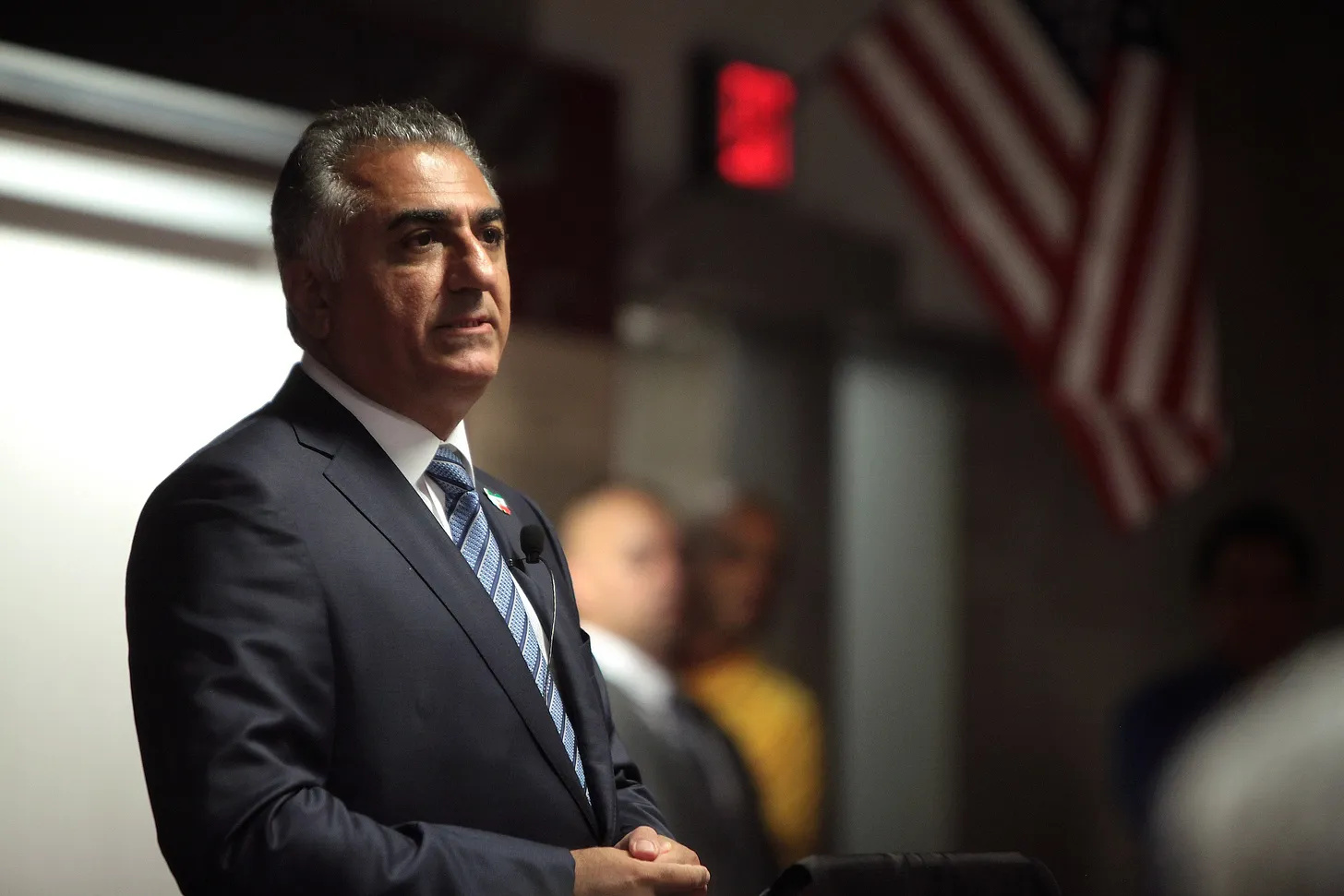
The Exile Crown Prince Serving Foreign Masters
In a luxurious estate in Bethesda, Maryland, Reza Pahlavi—son of Iran’s deposed shah—spends his sixth decade in exile. His $2.5 million home, funded via complex Luxembourg shell companies tied to the Pahlavi Foundation (accused of funneling $2–4 billion from pre-1979 oil revenues), starkly contrasts the daily hardships faced by Iranians. As one former political prisoner put it:
“When your revolution happens in Virginia conference rooms, you’ve already lost the people.”
Western Military Grooming (1978–Present)
In 1978, amid Iran’s revolutionary upheaval, 18-year-old Reza trained as a U.S. fighter pilot at Reese Air Force Base in Texas—an arrangement financed by Western governments supporting his father’s faltering regime. This deliberate detachment from Iran’s political reality ensured he remained a pliable asset for future geopolitical use.
During the 1980s, he reportedly collaborated with Mossad-associated arms dealer Yaakov Nimrodi on coup plots targeting the newly established Islamic Republic. Declassified MI6 notes described him as “malleable but useful,” emphasizing foreign powers’ view of him as a tool to fracture Iran’s internal resistance.
Today, his public persona is shaped by the U.S.-based Foundation for Defense of Democracies (FDD), backed by billionaire Paul Singer and Saudi interests. His speeches regularly echo FDD’s hawkish talking points, including calls for unilateral U.S. military action against Iran.
Gulf‑Funded Media Propaganda
Pahlavi’s image relies heavily on Gulf-financed outlets. Saudi-backed Iran International and Qatar-aligned Manoto TV air his speeches as polished calls for stability and liberal democracy while omitting the abuses, corruption, and SAVAK-era torture tied to his family’s rule.
Western media, influenced by vested interests, frequently present him as a credible liberal voice. These portrayals ignore his alliances with the IRGC and endorsements of foreign military strikes that killed Iranian civilians.
Further, his online presence—over 1.2 million Twitter followers—is largely inflated via bot networks in the UAE and hired services in other countries. In reality, his public appearances attract only a few hundred supporters.
The Mirage of Domestic Support
Contrary to his projected influence, credible polling paints a different picture. The 2022 GAMAAN survey of over 16,000 Iranians found under 1% support for restoring the monarchy—proof that royal nostalgia remains far from majority preference.
Analysts at Chatham House confirm that no significant pro-Pahlavi networks exist inside Iran—his influence is confined to wealthy diaspora circles far removed from grassroots struggles.
In 2023, his unilateral attempt to dominate the emerging Alliance for Democracy—rejecting consultation with Nobel laureates and ethnic minority leaders—led to its collapse. His dismissal of the major opposition coalition, the National Council of Resistance of Iran (NCRI), as a “non‑democratic cult” mirrors propaganda tactics once wielded by his father’s SAVAK and today’s IRGC Intelligence Ministry.
Weaponized Privilege and Risky Alliances
Pahlavi’s foreign engagements further undermine his credibility. In April 2023, he became the first Iranian public figure to visit Israel—participating in Holocaust memorial events with Prime Minister Netanyahu.
More alarmingly, he publicly endorsed Israeli airstrikes in June 2025 that killed 935 Iranian civilians, calling them “necessary for regime change.” This stance, especially from Netanyahu’s government, reinforces Iranian fears of foreign intervention.
He also disclosed “bilateral contacts” with IRGC and Basij commanders—groups responsible for decades of repression, torture, and executions. By seeking their support, Pahlavi reveals a readiness to align with repressive forces antithetical to democratic ideals.
The Iranian Ground Reality
Inside Iran, citizens face spiraling inflation, unemployment, poverty, and political repression. The 2022–23 “Mahsa Amini” protests exemplify the popular demand for a secular, democratic republic, with GAMAAN polls suggesting around 84% favor a secular state replacing theocracy.
What people need—and deserve—is leadership rooted in real suffering and everyday resistance, not distant figures financed by foreign patrons or nostalgic for royal privilege.
A Pawn, Not a Promise
Reza Pahlavi is not an opposition leader—but a skilled geopolitical pawn. Groomed on U.S. military bases, scripted by foreign think tanks, and glorified by externally funded media, his role is to fracture genuine Iranian resistance. His alliances—with Iran’s own oppressors, foreign governments, and Western-backed broadcasters—lay bare the contradictions at the heart of his proclaimed liberal leadership.
Despite decades in exile, he has never led, organized, or endured a day of hardship in his life. He has nothing to show for governing a country as geopolitically complex as Iran—and no connection to the struggles that define the lives of its people. His legacy is one of royal privilege wrapped in billions siphoned from the nation’s pre-revolution wealth, not of earned leadership or sacrifice.
For those who truly seek a free and democratic Iran, the lesson is undeniable: real change won’t come from figureheads who inherited a name—but from those who’ve paid the price for freedom with their voices, their lives, and their unrelenting courage.
Author’s Note
I am currently putting the final touches on my forthcoming book—a contemporary and deeply researched history of Iran, examining the rise and fall of the Pahlavi dynasty from Reza Shah to the current self-declared Crown Prince. This work explores how Britain installed a monarchy in Iran to secure its interests and later handed the reins to the United States after World War II—setting the stage for generations of foreign meddling, repression, and resistance.
If you found this article meaningful, I invite you to pledge your support to help bring this book and more investigative work to life. Your encouragement, feedback, and support mean the world to me—and to many others searching for truth behind the headlines.