
Unmasking a New Phase in Tehran’s Nuclear Deception
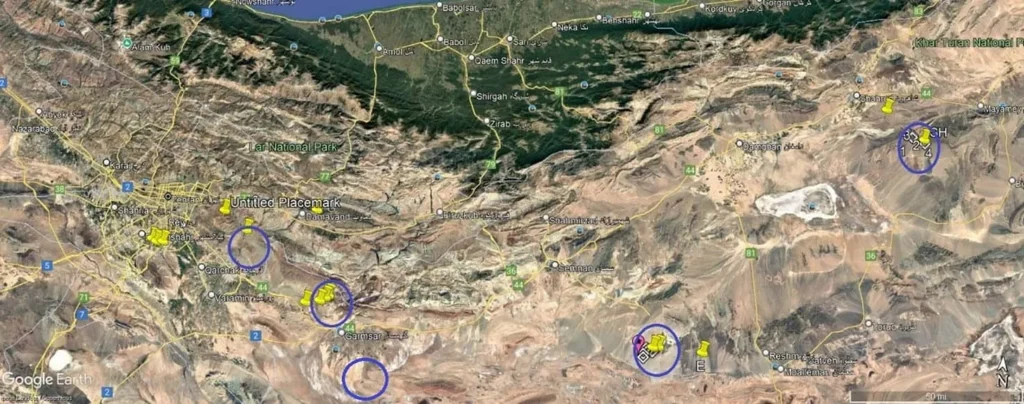
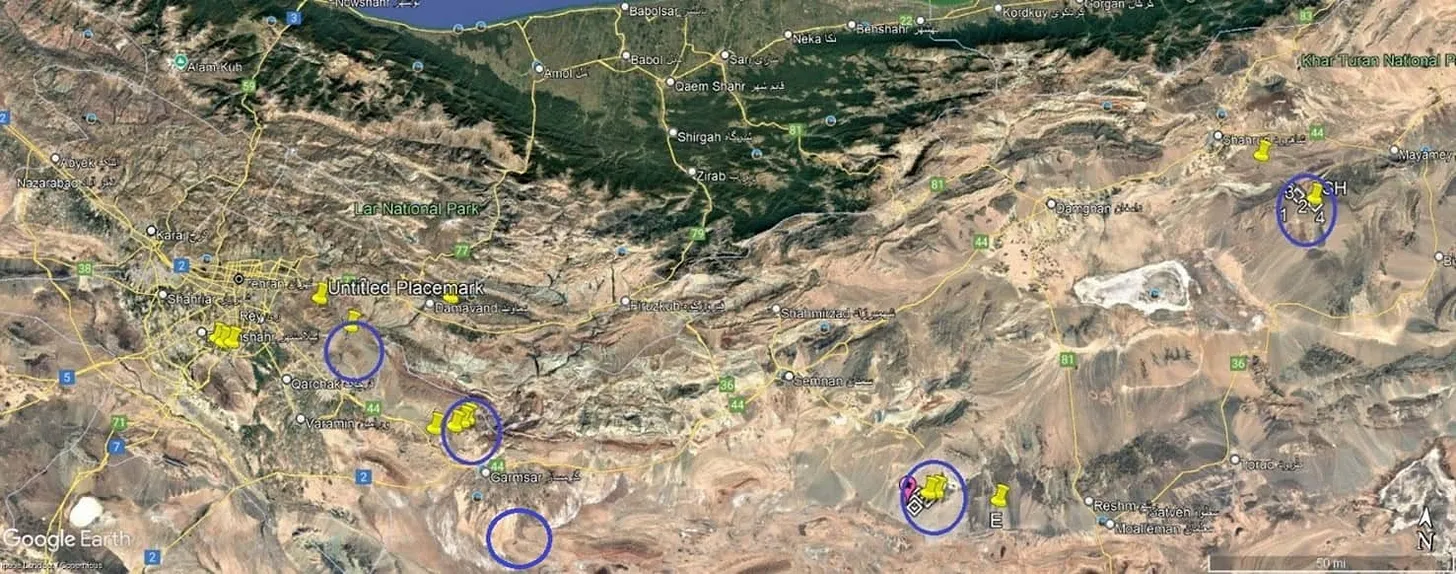
2,500-acre complex codenamed “Rangin Kaman” (Rainbow), nestled near Ivanaki, southeast of Tehran.
For years, the world has wrestled with the Islamic Republic of Iran’s nuclear ambitions. Now, newly unearthed intelligence reveals that Tehran has not merely maintained its weapons program—it has accelerated it behind a thick veil of deception, secrecy, and front companies. At the heart of this revelation lies a fortified 2,500-acre complex codenamed “Rangin Kaman” (Rainbow), nestled near Ivanaki, southeast of Tehran.
This exposé comes from the People’s Mojahedin Organization of Iran (PMOI/MEK), the primary resistance force operating inside the country. Its vast network—comprising whistleblowers, engineers, defense insiders, and even sympathetic regime employees—continues to deliver verifiable intelligence at great personal risk. What they’ve now uncovered should alarm every policymaker engaged in dialogue with Tehran: a secret weapons facility designed to develop boosted nuclear warheads for ballistic missiles with ranges over 3,000 kilometers.
Iran’s Organization of Defensive Innovation and Research (SPND), a military entity operating under the Ministry of Defense, began this project in 2009. While publicly disguised as a chemical plant operated by Diba Energy Sina, the Rainbow site is actually the epicenter of a renewed push for nuclear arms—one that explicitly includes the production and use of tritium, a radioactive isotope critical to enhancing the destructive yield of nuclear weapons and enabling the construction of hydrogen bombs.
A Game of Deception and Front Companies
At the heart of this deception is a vast industrial shell game. The operation is run through five front companies under the umbrella of Pishtazan-e Tose’e San’ati Aria Razi, chaired by IRGC Brigadier General Naser Maleki—a key figure in Iran’s missile development, sanctioned by the UN in 2007 for nuclear and ballistic activities.
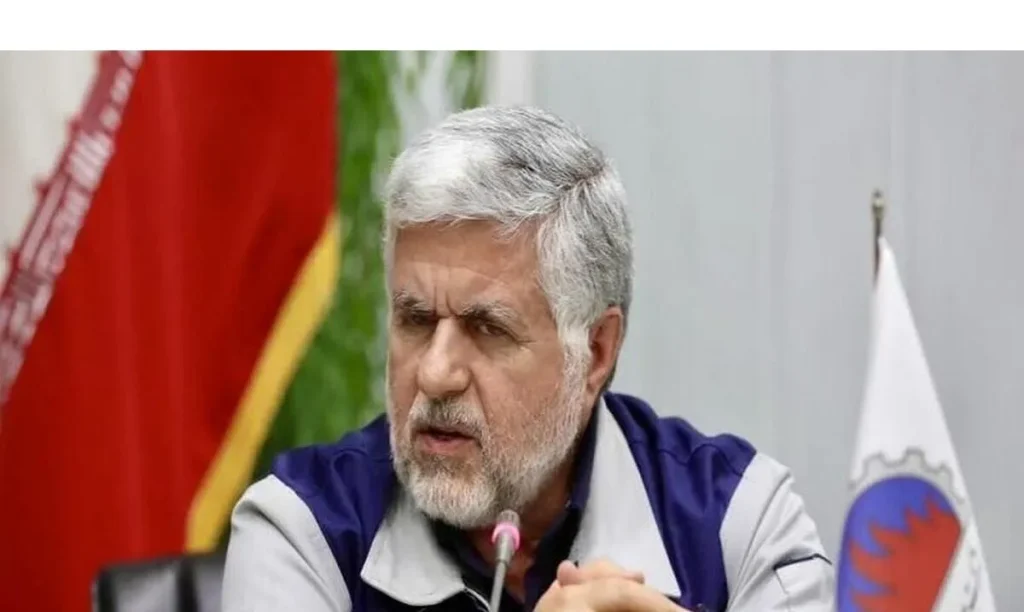
IRGC Brigadier General Naser Maleki—a key figure in Iran’s missile development
One of these companies, Diba Energy Sina, publicly claims to manufacture chemical solvents and polymers. But the company’s two chemistry-trained board members, Mahmoud Sanayei Zadeh and Javad Mirzaei, have published research directly relevant to chemical separation and tritium extraction—processes closely tied to nuclear enrichment, not paint production.
This industrial masquerade is no accident. It is a deliberate strategy of obfuscation by a regime that has mastered the art of “plausible deniability.” And what lies behind the gates of the Ivanaki site is no ordinary factory—it is a military-grade nuclear fortress.
The Ivanaki Site: A Fortress with a Mission
Located along the Tehran–Semnan Highway, the Ivanaki facility is accessible only via a heavily restricted military road, closely monitored by IRGC intelligence and surveillance. The facility includes three major zones, each with separate complexes of underground bunkers, hangars, and operational labs. Even the surrounding Kuh-e Sefid mountain range has been declared a no-hunting zone to prevent civilian access.
The site is protected by an IRGC Aerospace Force long-range Qadir radar system and an air defense battery stationed just 28 kilometers away. Such high-level protection is typically reserved for Iran’s most critical national security assets.
The late Mohsen Fakhrizadeh Mahabadi, the mastermind of Iran’s nuclear program who was assassinated in 2020, personally oversaw the site’s development. His close residence in Ab Sard, just miles away, further underscores the site’s strategic importance.
Tritium: The Nuclear X-Factor
Iran’s intensified focus on tritium is particularly troubling. This isotope plays a pivotal role in the production of boosted fission weapons—compact, high-yield bombs well-suited for missile delivery. Tritium is also a precursor for thermonuclear (hydrogen) weapons, marking a dangerous evolution in Iran’s nuclear ambitions.
Iran has already made illicit attempts to acquire tritium: in 2005 from South Korea and in 2008 from Germany. Today, it is producing it domestically, thanks to the recruitment of nuclear fusion specialists from Iran’s Atomic Energy Organization. Scientists like Dr. Ebrahim Haji Ebrahimi and Hadi Zaker Khatir have been transferred to SPND and instructed to remove all references to fusion or tritium from public academic databases.
This concealment is no coincidence—it’s a red flag.
A Coordinated, Covert Expansion
Since 2009, Iran has quietly constructed four new military-nuclear facilities in Semnan Province, including the Rainbow site, Garmsar Radar Station, Shahroud Missile Base, and the expanded Semnan Missile Facility. The Ahmadinejad-era designation of Semnan as a military zone allowed the regime to move its operations away from previously exposed sites in Tehran province.
In concert, these facilities form a strategic network—a parallel nuclear program with its own personnel, infrastructure, and military protection. It is a direct continuation of the Amad Plan, the original Iranian weapons project halted in 2003, but now refashioned under the SPND with even greater secrecy.
What the World Must Understand—and Do
This isn’t just another violation of the JCPOA. It is a regime’s premeditated, decade-long campaign to deceive the international community while progressing toward nuclear armament. Tehran’s nuclear program is not a civilian energy project. It is a military weapons program disguised in commercial packaging—operating in plain sight, and now caught again.
Yet despite these revelations, diplomatic momentum appears to lean once more toward engagement.
Just last week, U.S. Republican Senators Tom Cotton and Lindsey Graham introduced a resolution calling for the complete dismantlement of Iran’s nuclear program. Speaking to reporters, Graham warned that “a nuclear Iran makes for a far more dangerous world,” predicting an arms race in the Middle East and catastrophic consequences for Israel and the United States alike.
“Iran cannot get a nuclear weapon—that’s off the table,” Graham said.
Cotton, for his part, cited Iran’s proxy wars, assassination plots, and support for terrorist groups like Hezbollah and Hamas as part of a broader strategy to use nuclear capability as a geopolitical shield. “An Iranian nuclear weapon would embolden Tehran’s campaign of terror across the globe.”
Their resolution echoes what the NCRI and the PMOI/MEK have long argued: that the only effective policy is one that recognizes the true nature of the regime—an unaccountable theocracy willing to deceive the world while funneling its resources into weapons of mass destruction.
Make no mistake: this is no petrochemical facility
The time for symbolic sanctions and polite skepticism is over. The Rainbow site is not a chemical plant. It is the centerpiece of Iran’s most dangerous and deceptive military endeavor. The brave individuals inside Iran who risk their lives to bring this information to the world deserve not just our attention, but our action.
Their message is clear: Tehran is not buying time to negotiate. It’s buying time to build.
What Must Be Done
The international community—especially those still committed to “engagement” strategies with Tehran—can no longer plead ignorance. The Islamic Republic has mastered the art of misdirection, using civilian fronts, plausible deniability, and diplomatic cover to progress toward the unthinkable.
The Ivanaki site, with its tritium labs, missile platforms, and fusion scientists, is a red line. And it demands action—not merely condemnation or symbolic sanctions.
The burden now falls on democratic governments and multilateral institutions: to reassess the nuclear threat, to reimpose comprehensive inspections, and to consider targeted countermeasures that reflect the gravity of what’s at stake.
The Rainbow site is not just Iran’s secret. It’s the world’s problem.