
Recent Crises Highlight the Endgame for Supreme Leader Khamenei
Two months after Nowruz 1404 in Iran—spring, a season symbolizing renewal, rebirth, and flourishing in Persian culture—the Iranian regime is moving in the opposite direction. While nature blossoms and awakens with vitality, the Islamic Republic is experiencing accelerating decay and deepening instability. The theocratic regime finds itself in an unprecedented state of crisis, signaling unmistakably that this year could mark the end of its oppressive rule.
All signs point toward imminent upheaval, as the regime’s internal conflicts and vulnerabilities intensify, bringing it perilously close to collapse. Each passing day amplifies the palpable sense of impending change, reinforcing the belief that 1404 could indeed become the year Iran finally breaks free from oppression and embraces its long-awaited democratic awakening.
A Crackdown on the Loyalists
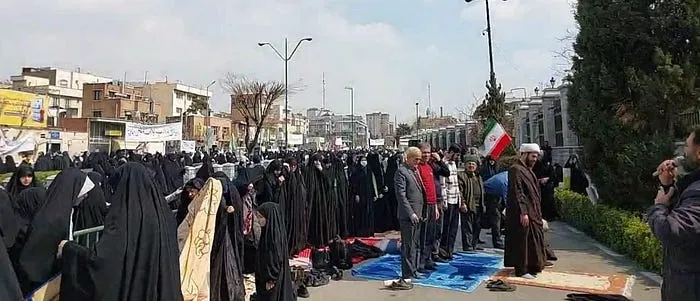
A few weeks ago, in a stunning display of instability which went unnoticed, Iranian security forces violently dismantled a sit-in protest organized by regime loyalists demanding stricter enforcement of mandatory hijab laws. These protesters who have historically formed the regime’s ideological backbone — were not simply dispersed but were beaten, detained, and unceremoniously abandoned on Tehran’s outskirts.
The regime’s brutal response exposed not merely a momentary lapse in judgment but profound anxiety about any assembly, even from loyal elements. Rasouli, an advisor to Parliamentary Speaker Mohammad Bagher Ghalibaf, labeled the sit-in “illegal,” signaling the regime’s definitive end to a period of so-called “patient tolerance.” Tehran’s governor openly praised the crackdown, warning all factions — supportive or otherwise — that unauthorized gatherings would be crushed decisively.
The harsh criticism from within was immediate. Cleric Hamid Rasaei condemned the regime’s actions as “a grave error,” while Allah-Karam, a staunch loyalist enforcer associated with Supreme Leader Ali Khamenei, publicly expressed deep frustration, emphasizing the “unfortunate and damaging consequences” of such actions occurring even on Quds Day, traditionally significant for regime solidarity.
The Regime’s Spiral of Fear
This startling event reveals a regime consumed by paranoia, increasingly unable to distinguish friend from foe. The regime’s fear of igniting broader unrest has grown so acute that it now perceives even its staunchest supporters as potential sparks for revolt. The actions in Tehran reflect not strength, but desperation — a state scrambling to suppress dissent wherever it arises, irrespective of allegiance.
Supreme Leader Khamenei, haunted by historical precedents of regime collapse, understands his regime is dangerously fragile. He has publicly compared the past year to 1981, another turbulent period marked by internal dissent and violent crackdowns. But today, the regime is not confronting isolated episodes; it is caught in an accelerating spiral of internal discord, paranoia, and repression.
Resistance: The Catalyst for Collapse
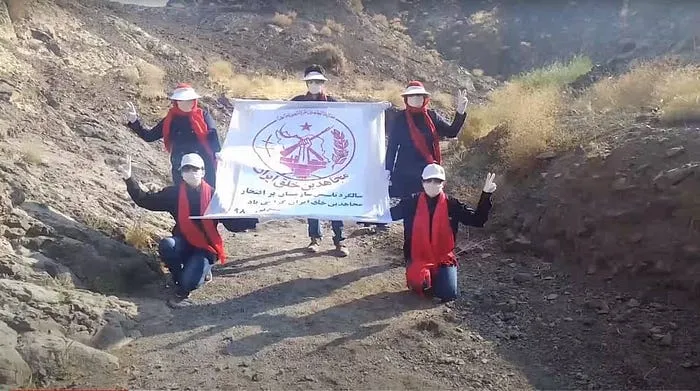
In the past Iranian year 1403, resistance units affiliated with the People’s Mojahedin Organization of Iran (PMOI/MEK) carried out more than 3,000 anti-regime operations—a staggering surge in strategic defiance. From torching IRGC-Basij outposts and recruitment centers in cities like Mashhad, Kermanshah, Behshahr, and Kerman, to launching targeted explosions against regime indoctrination hubs in Qaemshahr and Eslamabad-e Gharb, their actions disrupted the regime’s most vital instruments of control: its surveillance, propaganda, and terror networks. Even the faces of Khomeini, Khamenei, and the late General Qassem Soleimani did not escape this wave of rebellion—banners and posters bearing their images were publicly burned or torn down across towns including Saravan, Malayer, Abhar, and Maragheh.
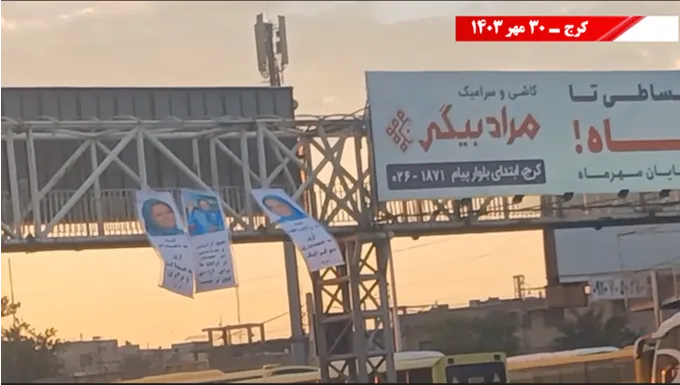
These operations were not isolated. They were synchronized acts of resistance—designed to erode the illusion of fear the regime depends on. The placement of Maryam Rajavi’s image on highway overpasses, often in broad daylight, speaks volumes: the people’s alternative vision is not only alive but boldly visible in the very heart of cities once gripped by silence.
The regime’s deep fear—that any spark of dissent could escalate into an unstoppable firestorm—is not paranoia; it’s rooted in lived experience. With resistance units now operating in every province, the potential for localized unrest to explode into a national uprising has never been greater. What was once spontaneous outrage is rapidly becoming disciplined rebellion, echoing the spirit of past uprisings but with far sharper coordination and strategic clarity.
The message is unmistakable: 1403 was not a year of quiet resistance—it was a rehearsal for a reckoning in 1404.
No Path to Stability
Unlike past leaders who occasionally found room for compromise, Khamenei’s rigid and paranoid governance leaves no path for resolution or conciliation. Nuclear negotiations have devolved into mere smokescreens, efforts to delay rather than resolve tensions, as repeatedly highlighted by intelligence from the National Council of Resistance of Iran (NCRI).
Internationally, the NCRI, under the leadership of president-elect Maryam Rajavi, has dramatically elevated the plight of Iranians. Offering a comprehensive, widely supported 10-point plan for a democratic republic, the NCRI has successfully galvanized global support, isolating the regime further.
A Regime on Borrowed Time
The regime’s internal crackdown, especially against its own base, signals its final descent into chaos. Far from projecting power, these actions betray a regime teetering on collapse, incapable of tolerating even loyal dissent. Coupled with the relentless, organized resistance ready to mobilize at a moment’s notice, the regime’s days are unmistakably numbered.
As the Iranian year 1404 dawns, the clerical regime stands on the precipice, more vulnerable and unstable than ever. The internal fractures have become irreparable, setting the stage for a powerful eruption of change. The year ahead may finally see the fulfillment of a long-held aspiration — a free and democratic Iran.