
Australia’s unprecedented response to arson plots shows how Iran uses embassies and organized crime to wage a silent war.
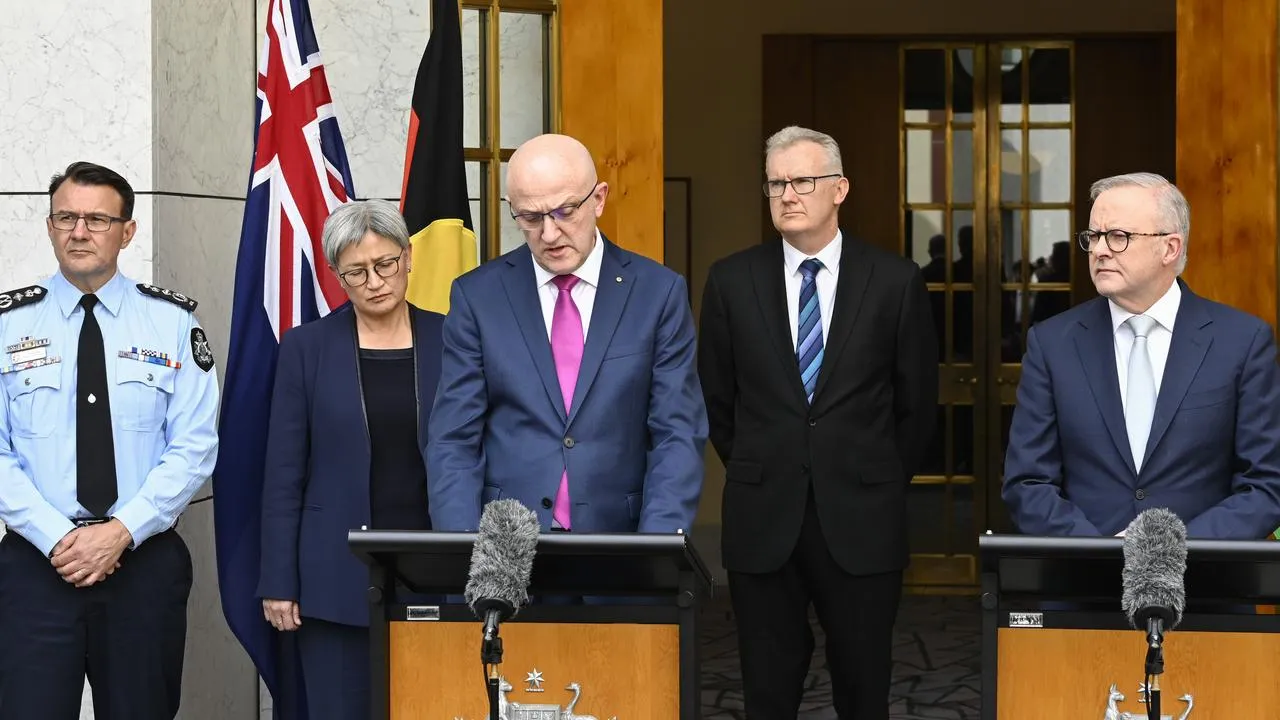
On 26 August, beneath the marble colonnade of Parliament House in Canberra, Australia did something extraordinary. Flanked by his foreign and home affairs ministers, the prime minister, Anthony Albanese, announced that his government would expel Iran’s ambassador and three other diplomats and shut Australia’s embassy in Tehran. No modern Australian government has taken such a step. This was not about theatre but about sovereignty.
Albanese explained that the Australian Security Intelligence Organisation (ASIO) and the federal police had concluded that Tehran directed multiple arson attacks on Australian soil. These were, he said, “extraordinary and dangerous acts of aggression orchestrated by a foreign nation” intended to “undermine social cohesion and sow discord”. In response, Canberra will evacuate its own diplomats from Tehran and legislate to list Iran’s Islamic Revolutionary Guard Corps (IRGC) as a terrorist organization.
For outsiders, the decision may look like a sudden escalation. It isn’t. Australia has become the latest front in what can only be called Iran’s global terrorism machinery – a network of state agencies, proxy militias, organised‑crime syndicates and diplomatic cover that operates from West Africa to Europe and now, it seems, to the suburbs of Sydney and Melbourne. Over the past year I have documented how this machinery functions: at its apex sits Ayatollah Ali Khamenei. Through the IRGC and the Ministry of Intelligence and Security (MOIS) he has turned violence into a tool of statecraft. High‑value operations are vetted at the top, then run through units such as Unit 840 of the Quds Force. On the ground, Tehran outsources violence to criminal gangs – from Sweden’s Foxtrot syndicate to the Mocro Mafia in the Netherlands – to muddy attribution and avoid diplomatic fallout. Iranian diplomats act as logistics hubs, quietly funding and supporting these cut‑outs. The objective is not just to punish perceived enemies; it is to terrorise dissidents, intimidate politicians and fracture societies.
Terror Directed from the Top
Australia’s findings echo this pattern. Albanese spoke not of lone wolves but of state‑directed violence. ASIO Director‑General Mike Burgess explained that investigators had “uncovered and unpicked the links between the alleged crimes and the commanders in Iran’s Islamic Revolutionary Guard Corps” and that the IRGC used “a complex web of proxies to hide its involvement”. He emphasised that ASIO’s conclusions were based on intelligence, not politics; these attacks “put lives at risk”. The message was unambiguous: terrorism is not an occasional tactic for the Islamic Republic. It is an institutionalised policy authorised at the highest level.
This fits a broader pattern. Iran’s supreme leader commands both the IRGC and the MOIS; extraterritorial operations, whether in the Middle East or the West, reinforce his revolutionary mission and sustain the regime’s legitimacy at home. When internal unrest mounts – as it did after the death of Mahsa Amini – the regime lashes out abroad to project strength. Killing or intimidating critics overseas also tells dissidents that no one is beyond reach.
Diplomatic Cover and Covert Networks
Canberra’s response – expelling diplomats and suspending embassy operations – targets not just the perpetrators but also the infrastructure that enables them. Foreign Minister Penny Wong told reporters that Iran’s actions were “extraordinary and dangerous acts of aggression orchestrated by a foreign nation” that sought to undermine the cohesion of Australian society and put its people in danger. She noted that this is the first time since the Second World War that Australia has expelled an ambassador. Wong also announced that Australia’s diplomats had been withdrawn from Tehran and relocated to a third country for their safety. Implicit in these measures is the recognition that diplomatic missions can be part of the problem: in 2021, a Viennese‑based Iranian diplomat was convicted for trying to smuggle explosives to bomb an opposition rally near Paris. Closing embassies is not merely symbolic; it disrupts the logistical pipelines Tehran relies on to coordinate cut‑outs and move funds.
The use of proxies and organised crime is central to Iran’s modus operandi. Burgess’s “complex web of proxies” mirrors my earlier reporting on how the IRGC relies on gangs like the Mocro Mafia, which nearly murdered former European Parliament vice‑president Alejo Vidal‑Quadras in Madrid in 2023. In that case, the shooters were members of a Dutch‑Moroccan drug cartel; Iran’s fingerprints emerged only after meticulous investigation.
In Australia, ASIO believes Iranian commanders outsourced tasks to foreign intermediaries to avoid direct contact. The network is fluid: criminals, smugglers and brokers provide access to weapons, vehicles and safehouses, while Iranian operatives fund and direct operations from afar. This outsourcing makes it harder for law‑enforcement agencies to trace attacks back to Tehran and easier for the regime to deny responsibility.
Terrorism as a Survival Strategy
The purpose of these attacks is as important as their mechanics. Albanese said Iran’s aim was to “undermine social cohesion and sow discord”. By striking at community spaces and businesses, the planners hoped to inflame tensions, provoke reprisals and create a climate of fear. This is consistent with the regime’s broader pattern: when confronted with domestic protests or geopolitical setbacks, Tehran strikes outward. Overseas terror acts distract from internal crises, bolster narratives of strength to the regime’s base and tell dissidents abroad they are not safe. In the 1990s, Iranian agents murdered Kurdish opposition figures in Berlin. More recently, plots have been uncovered against journalists and politicians in London, Paris and New York. Australia’s experience shows that no country is immune.
Why Europe Should Pay Attention
Europe has already been targeted. In 2018, Belgian authorities foiled a Ministry of Intelligence plot to bomb an opposition rally near Paris. The mastermind, Iranian diplomat Assadollah Asadi, was convicted and handed a 20‑year sentence; however, he served just over two years before being freed in a controversial prisoner swap and flown home to Iran, where he was welcomed by officials.
The IRGC’s Unit 840 has been linked to attempted assassinations in Britain and Spain. European intelligence services have documented how Tehran hires local gangs to surveil and attack dissidents. Yet, apart from the United States, few Western governments have taken comprehensive action. France and Germany have expelled individual diplomats; the European Union has sanctioned some Iranian officials. But the IRGC remains unlisted as a terrorist organisation in most of Europe, and Iranian embassies continue to operate largely unhindered.
Australia’s response offers a blueprint. Expelling diplomats sends a powerful signal and deprives Tehran of the infrastructure it uses to manage proxies. Designating the IRGC as a terrorist organisation would allow European law‑enforcement agencies to prosecute anyone providing material support to the group and freeze assets linked to its front companies. Suspending diplomatic relations may be necessary when credible intelligence links attacks to Tehran. Above all, European governments must recognise that these plots are not isolated incidents but part of a state‑sponsored campaign. Turning a blind eye only emboldens the perpetrators.
Critics argue that such steps could jeopardise nuclear negotiations or harm ordinary Iranians. That is a false dichotomy. The Iranian people themselves are victims of the regime’s violence; they are arrested, tortured and executed for demanding basic rights. Standing up to Tehran’s extraterritorial terror does not preclude engagement on other issues or humanitarian assistance. It does require drawing clear red lines: murder and arson on our soil will not be tolerated, and those who order them will face consequences.
A Call to Act
As Wong noted, this is the first expulsion of an ambassador since World War II. That should give Europe pause. It reflects the seriousness of what Iran has done and the danger of what it might do next. The same network that used proxies to set fires in Melbourne could just as easily target a church in Madrid or a dissident in Berlin. The “extraordinary and dangerous acts of aggression” Albanese described are part of a broader pattern that Europe ignores at its peril.
Australia acted decisively. It recognised that state‑sanctioned terrorism directed from the top, facilitated by organised crime, diplomatic cover and a strategy of sowing discord, demands an equally forceful response. For European governments, the path forward is clear: bolster intelligence sharing, sanction Iran’s terror apparatus, restrict diplomatic channels when they are misused and, above all, protect their citizens and communities from a regime that has long considered foreign soil its battlefield. Failing to do so will not only betray the victims of past attacks; it will invite the next assault.