
Tehran’s “Forward Defense,” Backward Politics at a Rare Peace Window
1) The inflection point
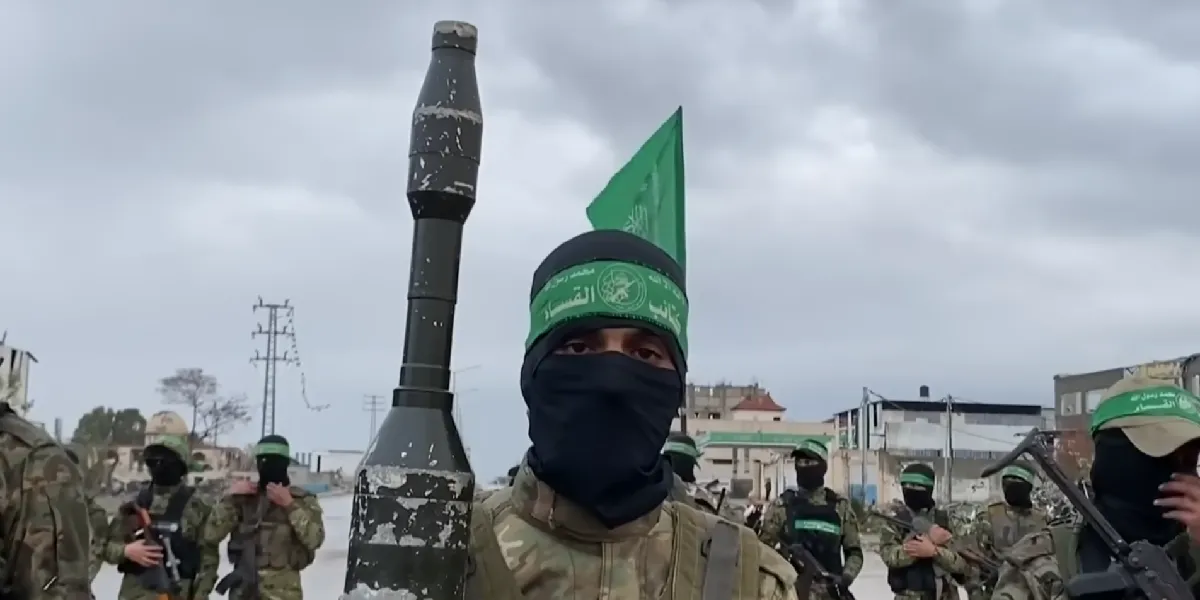
Hamas has publicly accepted core elements of the U.S. President’s plan: a phased cease-fire, an all-for-all hostage–prisoner exchange, and the handover of day-to-day governance in Gaza to a technocratic authority backed by regional states. In response, Washington called on Israel to “immediately stop the bombing of Gaza” to unlock the hostage deal’s first phase; Jerusalem signaled readiness to implement an initial step if Hamas follows through. European and Arab leaders welcomed the opening and urged rapid de-escalation. Hamas response to Trump’s plan
One actor broke ranks: Iran’s ruling system under Ali Khamenei.
2) Tehran vs. the tide—this time is different
Within hours of the Hamas statement, senior regime figures denounced the plan. Tehran’s Friday-prayer leader Ahmad Khatami called it “satanic.” Sadeq Amoli-Larijani, chair of the Expediency Council, branded it “fascist.” A Khamenei-affiliated outlet framed the proposal as a scheme “to save Netanyahu from the Gaza quagmire.” All three were carried by Persian-language outlets inside Iran. روزنامه دنیای اقتصاد
Rejectionism is not new. Khamenei has long dismissed the two-state framework as a time-buying “facade,” a stance reiterated around this year’s “New York Declaration” at the U.N. General Assembly—adopted 142–10—which Tehran declined to support. What is new is that Hamas itself has edged toward a cease-fire architecture, leaving Tehran rhetorically isolated from Arab mediators (Cairo, Doha, Ankara) and at odds with the practical priorities of Palestinians inside Gaza. Khamenei.ir
3) Why Khamenei’s “no” erodes influence
a) Arab convergence leaves Iran out of the room. If a monitored cease-fire begins freeing hostages and stabilizing borders, Gulf and Arab capitals will double down on reconstruction and security arrangements. In that environment, Tehran’s oppositional line reads as obstruction—not leadership. The U.N.’s new consensus text provides those capitals a common reference outside Washington’s frame. UN News
b) Patron–partner misalignment with Hamas. Iranian leverage over Hamas has rested on cash, training, and weapons—and on appearing strategically aligned. If Hamas calculates that a technocratic Gaza and quiet serve its survival while Tehran demands maximalist “resistance,” the patron becomes the problem. Western designations have mapped the Iran→Hamas/PIJ pipelines; a cease-fire with intrusive monitoring blunts those channels. U.S. Department of the Treasury
c) The doctrine doesn’t travel in a peace window. For a decade, Tehran’s “forward defense” justified expeditionary warfare—Hezbollah in Lebanon, Quds Force in Syria, Iraqi militias—under the logic of fighting “there” to avoid fighting “here.” As neighbors pivot to de-escalation, the same logic looks like a license for perpetual proxy war. The doctrine is documented in Iranian and international analyses and explicitly echoed by Khamenei himself (“if we didn’t fight in Syria, we’d be fighting in Kermanshah and Hamedan”). Syria Transition Challenges Project
4) Domestic dynamics: Why this split matters inside Iran
Public mood is brittle and anti-adventurist. For years, street slogans have condemned the regime’s foreign adventures—“No Gaza, No Lebanon; my life for Iran”—reappearing in the 2022–2025 protest waves. This sentiment has only sharpened amid inflation and repeated labor actions (notably the nationwide truckers’ strike and teachers’ protests) and intensified repression after this summer’s Israel–Iran flare-up. In short: a costly foreign posture with shrinking returns.
نه غزه نه لبنان جانم فدای ایران
Maryam Rajavi’s counter-narrative lands cleanly. In a statement on October 4, 2025, Iranian opposition leader Maryam Rajavi welcomed the prospect of a cease-fire and a just, lasting peace, arguing that Khamenei’s theocracy is the principal spoiler that feeds war and blocks peace. That line matches public fatigue with proxy wars and links regime change to regional stabilization in a way many Iranians already intuit. It also undercuts Tehran’s claim to speak for “Palestine” inside Iran’s own information space. Gaza Ceasefire, Expressing Hope for Just and Lasting Peace
Risk of renewed unrest remains high. Economic distress is chronic (inflation hovering in the 40s by several estimates), and the security apparatus has responded to external pressure with internal crackdowns—especially in Kurdistan and among labor organizers. A cease-fire endorsed by Hamas but opposed by Khamenei will be read by many Iranians as proof that the regime prefers permanent conflict over national interest, a view that tends to mobilize cross-class grievance more than ideology does. نرخ تورم ایران
5) What to watch next (policy-relevant indicators)
- Cease-fire mechanics: verification, border regimes (Egypt/Gaza), and the governance mandate for a Gaza technocratic authority. Each new mechanism narrows space for IRGC-QF logistics. Reuters
- Arab financing streams: where reconstruction money lands, and which projects are insulated from spoiler attacks or procurement sanctions. European Council
- Sanctions targeting logistics, not logos: keep mapping the facilitators (banking nodes, exchange houses, shipping) that move Iranian support to Hamas/PIJ; enforcement during a truce has outsized leverage.Treasury Sanctions
- Inside Iran: protest tempo among truckers/teachers/retirees; currency volatility; execution spikes; Kurdish region arrests. A spike here often signals regime insecurity, not stability. Iran’s truckers park in resistance
6) Why this matters for U.S. and European policy
- Exploit the Hamas–Tehran split, don’t paper it over. The more institutional the cease-fire (monitoring + money + borders), the less useful Iran’s spoiler tools. Tie assistance to compliance milestones that reward quiet and penalize re-armament. Reuters
- Narrative discipline. Use the U.N. “New York Declaration” as a multilingual anchor text with Arab and European partners. It keeps Tehran isolated and gives Palestinians a non-U.S. reference point. UN News
- Human-rights lens at home. Link any de-escalation dividend to measurable reductions in executions and political arrests. Tehran’s internal crackdowns typically intensify after external crises; call it out in real-time. Reuters
7) Counter-arguments & responses (for briefers)
- “Tehran gains if Israel doesn’t stop.” Short term, maybe. But if Arab states consolidate a Gaza off-ramp while Iran alone says “no,” Tehran loses access, funding leverage, and narrative leadership. The cost is cumulative. Reuters
- “Forward defense kept ISIS away—why stop now?” The same doctrine becomes a liability when neighbors want de-escalation and Palestinians want relief. It’s an answer to 2014, not to 2025. Evolution of Iran’s Military Strategy
- “Opposition statements don’t move Iranians.” Rajavi’s message rides an existing current: anti-adventurism and pro-normalcy. Watch labor-led protests and consumer-price shocks, not hashtags. Widespread Protests in Dozens of Iranian Cities
Bottom line
If Hamas proceeds with a monitored cease-fire and Gaza governance handover, and Arab states channel money into reconstruction and border management, Khamenei’s maximalist line will shrink Iran’s real leverage. Maryam Rajavi’s pro-peace stance meets a domestic audience already weary of proxy wars and economic decay. That combination—regional de-escalation plus anti-adventurist public sentiment—tightens the vise on Tehran’s ruling clergy. The regime can still arm and harass, but it cannot win friends by opposing a peace its own claimed constituency appears ready to test.
This analysis is part of my ongoing commissioned research on Middle Eastern geopolitics, with a special focus on Iran — produced by experts who live and work through these events day to day. For tailored studies, policy briefs, or exclusive analysis, you can contact me directly.